

Understanding Fracturing Technology
- Olga Basanko, P.E.
- Jan 21, 2024
- 5 min read
Updated: Feb 11, 2024
What Is Fracking
Modern high-volume hydraulic fracturing is a technique used to enable the extraction of natural gas or oil from shale and other forms of “tight” rock (in other words, impermeable rock formations that lock in oil and gas and make fossil fuel production difficult). Large quantities of water, chemicals, and sand are blasted into these formations at pressures high enough to crack the rock, allowing the once-trapped gas and oil to flow to the surface. It took some time for hydraulic fracturing (or “fracking”) to become as widespread as it is today. Although American entrepreneurs have known for more than a century how to crack open rocks deep below the earth’s surface to access trapped fossil fuel deposits, fracking gained a serious foothold in the nation’s energy market only in the past two decades. During this time, a fracking boom has helped the United States become the global leader in natural gas and crude oil production.

History of Fracking
The idea for fracking dates back to 1862 and has been credited to a Colonel Edward A. L. Roberts. In the midst of fighting during the Civil War’s Battle of Fredericksburg, Roberts noted the impact that artillery had on narrow, water-filled channels. A few years later, he applied his battlefield observations to the design of an “exploding torpedo” that could be lowered into an oil well and detonated, shattering surrounding rock. When water was then pumped into the well, oil flows increased, in some cases by as much as 1,200 percent, and fracking was established as a way to increase a well’s productive potential. In the 1940s, explosives were replaced with high-pressure blasts of liquids, and so “hydraulic” fracking became the standard in the oil and gas industry. It wasn’t until the beginning of the 21st century, however, that two key changes helped spark fracking’s current boom. One was the use of a certain type of fracturing fluid called slickwater (a mix of water, sand, and chemicals) to make the fluid less viscous. The other innovation was the pairing of fracking with horizontal drilling, a technique that increases the productive potential of each well because it can reach more of the rock formation that contains the oil and gas. Indeed, of the approximately one million U.S. wells that were fractured between 1940 and 2014, about one-third of those were fractured after 2000.
How Does Fracking Work
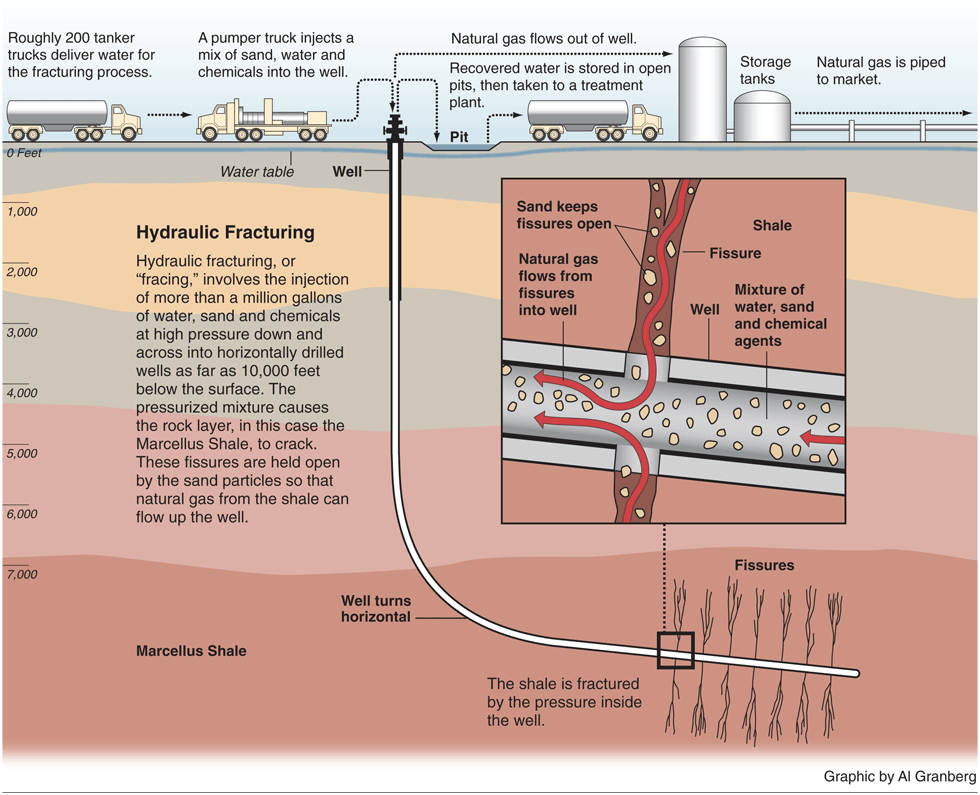
Oil and gas wells must be properly constructed to withstand intense temperature and pressure fluctuations. Otherwise, a well may be damaged, possibly allowing oil, gas, and fracking fluid to leak. Fracking involves blasting fluid deep below the earth’s surface to crack sedimentary rock formations. This includes shale, sandstone, limestone, and carbonate to unlock natural gas and crude oil reserves.The process begins with the drilling of a long vertical or angled well that can extend a mile or more into the earth. As the well nears the rock formation where the natural gas or oil lies, drilling then gradually turns horizontal and extends as far as thousands of feet. Steel pipes called casings are inserted into the well, and the space between the rock and the casing is fully or partially filled with cement. Small holes are made in the casing with a perforating gun, or the well is constructed with pre-perforated pipe. Clusters per stage is defined as the number of perforation guns used per fracture stage. Cluster spacing is defined as the distance between the perforations per lateral length during hydraulic fracturing. The spacing between the clusters can vary from 25 ft up to 100 ft. In general, the average number of clusters used in the industry is in the range of three up to eight clusters per stage. Initially, a large amount of fracking fluids are pumped into the well and goes through the tiny holes in the casing. The high-pressure of the fracking fluids and the continual pumping increases the pressure in the well, overcoming the strength of the reservoir rocks to break them apart. Fracking fluids are pumped into the well until the rocks are cracked to a desired length. Then, fracking fluid and propping agents are introduced into the well to extend the breaks and pack them with proppants, or small spheres composed of quartz sand grains, ceramic spheres, or aluminum oxide pellets, that will hold the fractures open after pumping has ceased. With the fracking well encased in steel and cement to prevent leakage into ground water, a fracking fluid is pumped down the well at pressures that can exceed 9,000 psi. Most of the injected fluid flows back to the wellbore and is pumped to the surface. This allows the oil or gas to flow to the surface for gathering, processing, and transportation, along with contaminated wastewater that is stored in pits and tanks or disposed of in underground wells.
Fracking Equipment
Hydraulic fracturing requires an extensive amount of equipment, such as high-pressure, high-volume fracking pumps; blenders for fracking fluids; and storage tanks for water, sand, chemicals, and wastewater. This infrastructure, plus more, typically arrives at drill sites via heavy trucks.
What Is in Fracking Fluid
Made up of as much as 97 percent water, fracking fluid also contains chemical additives and proppants (small, solid particles used to keep the fractures in the rock formation open after the pressure from injection subsides). Different chemicals are added for different purposes, based on the rock type and other specifics of a fracking site. Acids, for example, are used to dissolve minerals to help fossil fuels flow more easily; biocides eliminate bacteria; gelling agents help carry proppants into fractures; and corrosion inhibitors prevent steel parts of the well from being damaged by fracking fluid. The EPA identified 1,084 different chemicals reported as used in fracking formulas between 2005 and 2013. Common ingredients include methanol, ethylene glycol, and propargyl alcohol.
Proppants Used in Fracking
A proppant is a solid material, typically sand, treated sand or man-made ceramic materials, designed to keep an induced hydraulic fracture open, during or following a fracturing treatment, most commonly for unconventional reservoirs. is the fracking industry’s favored proppant, with high-purity quartz prized the most for its round shape, uniform size, and crush resistance. A single well operation can truck in thousands of tons of frac sand.

Fractured Rock Formations
Operators can’t completely control where fractures occur. When a fracture extends farther than intended, it can link up with a naturally occurring fault, other natural or man-made fractures, or other wells and then carry fluids to other geological formations, including, potentially, drinking water supplies. Equally concerning, according to the EPA, is the lack of data on how close induced fractures are to underground aquifers. While most fracked rock formations are separated from aquifers by thousands of feet, in some cases hydraulic fracturing occurs within a drinking water resource.
Water Supply Depletion
Fracking consumes a massive amount of water. In the United States, the average can run between 1.5 million and 9.7 million gallons of water to frack a single well, according to the USGS.

The amount depends on a few factors, including the type of well and rock formation. Water used for hydraulic fracturing is typically fresh water taken from groundwater and surface water resources. Although there are increasing efforts to use nonpotable water, some of these sources also supply drinking water. U.S. water consumption for fracking is still considered “negligible” compared with other industrial water uses (such as the cooling of coal-fired power plants). Water used for fracturing is too contaminated to return to its source without extensive treatment and so typically is disposed of deep underground, where it is removed from the freshwater cycle. The amount of water used per frack job has grown over time, exacerbating fracking’s impact on water supplies. In the already drought-ridden Permian Basin region of West Texas, for example, water use for fracking during those years increased by as much as 770 percent.
NRDC Organization - https://www.nrdc.org
All Sensors Corporation - https://allsensors.com

Comments